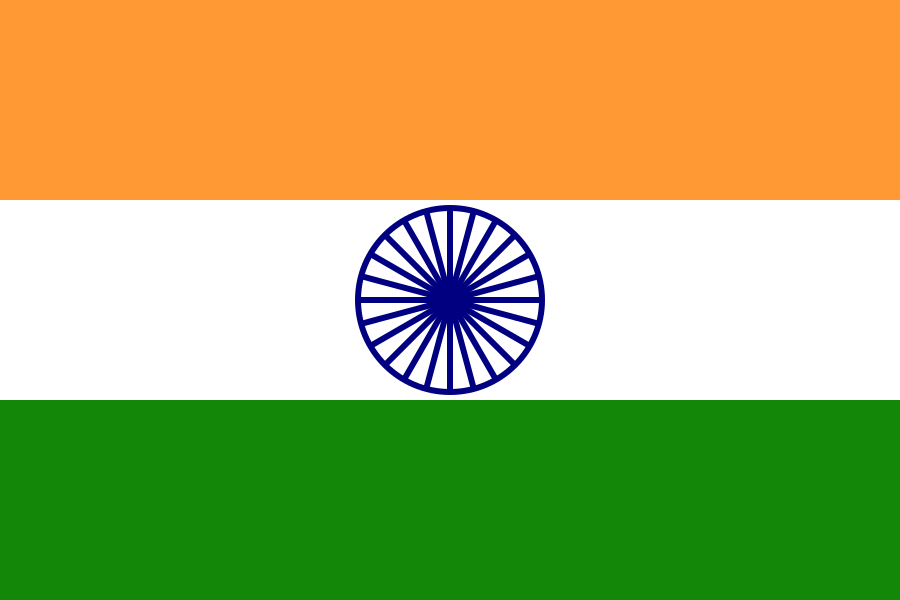

The Republic & the Nehru Years
India · 1953Andhra State and the States Reorganisation Commission
India took a major step toward redrawing its map on linguistic lines: Andhra State was carved from Madras on 1 October 1953, and the States Reorganisation Commission was appointed later that year. Abroad, India chaired the Korean prisoners-of-war repatriation commission after the July armistice, affirming its role in early non-aligned diplomacy.
Polity & Governanceराजव्यवस्था और शासन
- Andhra State was created on 1 October 1953 with Kurnool as capital and Tanguturi Prakasam as first Chief Minister — the first state formed on a linguistic basis in independent India, after Potti Sriramulu's fast unto death in 1952.
- Sheikh Abdullah was dismissed and arrested as Prime Minister of Jammu & Kashmir in August 1953, with Bakshi Ghulam Mohammad installed in his place — a turning point in the state's politics and the evolving status of Article 370.
- Syama Prasad Mookerjee, founder of the Bharatiya Jana Sangh, died in detention in Srinagar on 23 June 1953 — he had courted arrest while opposing Jammu & Kashmir's permit system and demanding fuller integration.
- 1 अक्टूबर 1953 को कुरनूल को राजधानी और टंगुटूरी प्रकाशम को पहले मुख्यमंत्री के रूप में स्थापित कर आंध्र राज्य का गठन किया गया — 1952 में पोट्टी श्रीरामुलु के आमरण अनशन के बाद, यह स्वतंत्र भारत में भाषाई आधार पर गठित पहला राज्य था।
- अगस्त 1953 में जम्मू-कश्मीर के प्रधानमंत्री के रूप में शेख अब्दुल्ला को बर्खास्त कर गिरफ्तार कर लिया गया, और उनके स्थान पर बख्शी गुलाम मोहम्मद को नियुक्त किया गया — यह राज्य की राजनीति और अनुच्छेद 370 की बदलती स्थिति में एक महत्वपूर्ण मोड़ था।
- भारतीय जनसंघ के संस्थापक श्यामा प्रसाद मुखर्जी का 23 जून 1953 को श्रीनगर में हिरासत के दौरान निधन हो गया — उन्होंने जम्मू-कश्मीर की परमिट प्रणाली का विरोध करते हुए और पूर्ण एकीकरण की मांग करते हुए अपनी गिरफ्तारी दी थी।
Economyअर्थव्यवस्था
- The Air Corporations Act, 1953 nationalised air transport, creating Indian Airlines Corporation for domestic services and Air India International for overseas services, which began operating from 1 August 1953 — a landmark in early public-sector expansion.
- The Estate Duty Act, 1953 levied a duty on property passing on death — part of Nehruvian efforts to curb concentrations of inherited wealth.
- The National Extension Service was launched on 2 October 1953 — it widened the Community Development Programme's reach for rural development under the First Five-Year Plan.
- The All India Khadi and Village Industries Board was set up in 1953 — institutionalising the Gandhian thrust on village industries, later given statutory form through the Khadi and Village Industries Commission.
- वायु निगम अधिनियम, 1953 (Air Corporations Act, 1953) ने हवाई परिवहन का राष्ट्रीयकरण किया, जिससे घरेलू सेवाओं के लिए इंडियन एयरलाइंस कॉर्पोरेशन और विदेशी सेवाओं के लिए एयर इंडिया इंटरनेशनल का निर्माण हुआ, जिन्होंने 1 अगस्त 1953 से काम करना शुरू किया — यह सार्वजनिक क्षेत्र के प्रारंभिक विस्तार में एक मील का पत्थर था।
- संपदा शुल्क अधिनियम, 1953 (Estate Duty Act, 1953) के तहत मृत्यु पर हस्तांतरित होने वाली संपत्ति पर शुल्क लगाया गया — यह विरासत में मिली संपत्ति के संकेंद्रण पर अंकुश लगाने के नेहरूवादी प्रयासों का हिस्सा था।
- 2 अक्टूबर 1953 को राष्ट्रीय विस्तार सेवा (National Extension Service) का शुभारंभ किया गया — इसने प्रथम पंचवर्षीय योजना के तहत ग्रामीण विकास के लिए सामुदायिक विकास कार्यक्रम की पहुंच को व्यापक बनाया।
- 1953 में अखिल भारतीय खादी और ग्रामोद्योग बोर्ड की स्थापना की गई — जिसने ग्रामोद्योगों पर गांधीवादी जोर को संस्थागत रूप दिया, जिसे बाद में खादी और ग्रामोद्योग आयोग के माध्यम से वैधानिक दर्जा प्रदान किया गया।
Society & Cultureसमाज और संस्कृति
- The Sangeet Natak Akademi, India's national academy for music, dance and drama, was inaugurated on 28 January 1953 — an important step in organised state patronage for the performing arts.
- The University Grants Commission was formally inaugurated on 28 December 1953 — to coordinate and maintain standards in higher education, later made statutory by the UGC Act, 1956.
- Tenzing Norgay, the Darjeeling-based Sherpa, with Edmund Hillary made the first confirmed ascent of Mount Everest on 29 May 1953 — celebrated across India and the wider region.
- भारत की संगीत, नृत्य और नाटक की राष्ट्रीय अकादमी, संगीत नाटक अकादमी का उद्घाटन 28 जनवरी 1953 को किया गया — यह प्रदर्शन कलाओं (performing arts) के लिए संगठित राज्य संरक्षण की दिशा में एक महत्वपूर्ण कदम था।
- उच्च शिक्षा में मानकों के समन्वय और रखरखाव के लिए 28 दिसंबर 1953 को विश्वविद्यालय अनुदान आयोग (University Grants Commission) का औपचारिक उद्घाटन किया गया — जिसे बाद में यूजीसी अधिनियम, 1956 द्वारा वैधानिक दर्जा दिया गया।
- दार्जिलिंग निवासी शेरपा तेनजिंग नोर्गे ने एडमंड हिलेरी के साथ 29 मई 1953 को माउंट एवरेस्ट की पहली पुष्ट चढ़ाई पूरी की — जिसका पूरे भारत और व्यापक क्षेत्र में जश्न मनाया गया।
India & the Worldभारत और विश्व
- After the Korean Armistice of 27 July 1953, India chaired the Neutral Nations Repatriation Commission, with Lt. Gen. K.S. Thimayya as chairman and Custodian Force India handling prisoners of war — a showcase of non-aligned peacekeeping.
- Vijaya Lakshmi Pandit was elected President of the 8th session of the UN General Assembly — the first woman to hold the post, signalling India's rising diplomatic stature.
- V.K. Krishna Menon's work on the Korean prisoner-of-war question was an important part of India's diplomacy during the Korean War.
- 27 जुलाई 1953 के कोरियाई युद्धविराम के बाद, भारत ने तटस्थ राष्ट्र प्रत्यावर्तन आयोग (Neutral Nations Repatriation Commission) की अध्यक्षता की, जिसके अध्यक्ष लेफ्टिनेंट जनरल के.एस. थिमैया थे और कस्टोडियन फोर्स इंडिया ने युद्धबंदियों का प्रभार संभाला — जो गुटनिरपेक्ष शांति स्थापना का एक उत्कृष्ट उदाहरण था।
- विजया लक्ष्मी पंडित को संयुक्त राष्ट्र महासभा के 8वें सत्र का अध्यक्ष चुना गया — इस पद को संभालने वाली वे पहली महिला थीं, जो भारत के बढ़ते कूटनीतिक कद का संकेत था।
- कोरियाई युद्धबंदियों के प्रश्न पर वी.के. कृष्ण मेनन का कार्य कोरियाई युद्ध के दौरान भारत की कूटनीति का एक महत्वपूर्ण हिस्सा था।
Landmark Judgments & Reportsऐतिहासिक निर्णय और रिपोर्ट
- The States Reorganisation Commission was appointed in December 1953 under Fazl Ali, with H.N. Kunzru and K.M. Panikkar as members — its 1955 report led to the States Reorganisation Act, 1956.
- The First Backward Classes Commission was appointed on 29 January 1953 under Article 340, chaired by Kaka Kalelkar — the first national effort to identify socially and educationally backward classes.
- The Taxation Enquiry Commission was constituted in 1953 under John Matthai — a comprehensive review of central and state tax structures.
- दिसंबर 1953 में फजल अली की अध्यक्षता में राज्य पुनर्गठन आयोग नियुक्त किया गया, जिसमें एच.एन. कुंजरू और के.एम. पणिक्कर सदस्य थे — इसकी 1955 की रिपोर्ट के परिणामस्वरूप राज्य पुनर्गठन अधिनियम, 1956 पारित हुआ।
- अनुच्छेद 340 के तहत 29 जनवरी 1953 को काका कालेलकर की अध्यक्षता में प्रथम पिछड़ा वर्ग आयोग की नियुक्ति की गई — यह सामाजिक और शैक्षिक रूप से पिछड़े वर्गों की पहचान करने का पहला राष्ट्रीय प्रयास था।
- 1953 में जॉन मथाई की अध्यक्षता में कराधान जांच आयोग (Taxation Enquiry Commission) का गठन किया गया — जो केंद्रीय और राज्य कर संरचनाओं की एक व्यापक समीक्षा थी।
Key figures
Jawaharlal Nehru — Prime Minister, associated with linguistic reorganisation, planned development and non-alignment.Rajendra Prasad — President of India.Fazl Ali — chairman of the States Reorganisation Commission, with H.N. Kunzru and K.M. Panikkar as members.Sheikh Abdullah — Prime Minister of Jammu & Kashmir, dismissed and arrested in August 1953.Vijaya Lakshmi Pandit — first woman elected President of the UN General Assembly, 1953.K.S. Thimayya — Lt. General who chaired the Neutral Nations Repatriation Commission in Korea.
UPSC / State PCS — Exam focus
- Polity / Post-Independence Consolidation: linguistic reorganisation — Andhra State (1 October 1953) and the Fazl Ali Commission leading to the States Reorganisation Act, 1956.
- Polity / Social Justice: Article 340 and the First Backward Classes Commission, 1953 — origin point of the backward-classes and reservation debate.
- IR / Modern History: India chairing the Korean Neutral Nations Repatriation Commission under Gen. Thimayya — early non-alignment and peacekeeping in practice.
- Economy: Air Corporations Act, 1953 and Estate Duty Act, 1953 — stock examples in public-sector and direct-tax history.
- Polity / Federalism: dismissal of Sheikh Abdullah in August 1953 and the evolving status of Article 370 in Jammu & Kashmir.
- Education / Culture: establishment of the UGC and Sangeet Natak Akademi in 1953 — institution-building in the early Republic.
- राजव्यवस्था / स्वतंत्रता-उपरांत सुदृढ़ीकरण: भाषाई पुनर्गठन — आंध्र राज्य (1 अक्टूबर 1953) और फजल अली आयोग जिसके परिणामस्वरूप राज्य पुनर्गठन अधिनियम, 1956 पारित हुआ।
- राजव्यवस्था / सामाजिक न्याय: अनुच्छेद 340 और प्रथम पिछड़ा वर्ग आयोग, 1953 — पिछड़ा वर्ग और आरक्षण की बहस का उद्गम बिंदु।
- अंतर्राष्ट्रीय संबंध / आधुनिक इतिहास: जनरल थिमैया के नेतृत्व में कोरियाई तटस्थ राष्ट्र प्रत्यावर्तन आयोग की भारत द्वारा अध्यक्षता — व्यावहारिक रूप में प्रारंभिक गुटनिरपेक्षता और शांति स्थापना।
- अर्थव्यवस्था: वायु निगम अधिनियम, 1953 और संपदा शुल्क अधिनियम, 1953 — सार्वजनिक क्षेत्र और प्रत्यक्ष-कर के इतिहास के प्रमुख उदाहरण।
- राजव्यवस्था / संघवाद: अगस्त 1953 में शेख अब्दुल्ला की बर्खास्तगी और जम्मू-कश्मीर में अनुच्छेद 370 की बदलती स्थिति।
- शिक्षा / संस्कृति: 1953 में यूजीसी और संगीत नाटक अकादमी की स्थापना — प्रारंभिक गणराज्य में संस्था-निर्माण।
Researched by a multi-model AI editorial board and cross-checked against sources; Bills are real records from BillTracker. This is a study aid, not a substitute for primary sources. Spotted an error? Tell us.